


At some point, every family faces the question: How do we successfully transition from diapers? While some children show interest in the potty early on, others take more time. But when do you even talk about potty training? What role do diaper materials or external pressure play? We spoke with an experienced family counselor who supports parents during this phase. Her answers provide guidance – for anyone who wants a relaxed approach to the topic.
Many parents wonder: When is my child ready to be potty trained? Are there typical signs?
An initial signal can be that children become interested in what others do on the toilet. They observe older siblings or parents. Then, at some point, they realize that they are using the diaper themselves. Initially, this often doesn't bother them. However, when they actively signal and want to be cleaned, that's a good moment for parents to introduce a potty. Parents can phrase this as an invitation or a question: "Shall we get a potty?"
Do children who are diapered with cloth diapers signal earlier? Because they feel the wetness more strongly?
The type of diapering can make a difference. Disposable diapers are very absorbent, so the wetness is hardly noticeable. With cloth diapers, it's different: children notice more clearly that something is wet. Nevertheless, one cannot say that children in cloth diapers are generally potty trained earlier. Many factors play a role.
Is there also such a thing as "too early" for potty training?
Parents often hear from grandparents: "Children used to be potty trained by one and a half." This probably often involved potty training. However, the impulse for potty training should primarily come from the child. If this developmental step is initiated by the parents, it can lead to overstimulation for the child. If parents pressure their child to be potty trained, it can have a rather negative effect on the entire process.
Is that why classic potty training is discouraged?
Yes. Potty training often involves rewards. For example, children get a sticker for each dry day and later a toy when they have collected a certain number of stickers. That is conditioning. It can work in the short term, but the child participates because they get something, and not because they perceive their own need to go to the bathroom. In many cases, this eventually backfires, and children refuse. The whole process can then be delayed.
Is there also a "too late"?
Not if parents take the child's signals seriously. Some children still wear a diaper during the day at 4.5 years old. As a rule, they are dry during the day by their 5th birthday. It often takes longer at night. In an average first-grade class, three children still need a diaper at night. This is also age-appropriate and can have various reasons. If children are physically and mentally developed for their age, they will sooner or later have the need to get rid of the diaper.
What does it mean for a child to be potty trained – physically and emotionally?
A diaper provides security. When a child is to learn to go to the potty themselves, a lot happens at once: they have to perceive the need to go to the bathroom, react in time, go to the bathroom, undress, go to the potty, clean themselves, wash their hands. This is a complex process that takes time and good guidance. Some children need weeks for this, others months.
How does potty training succeed in daycare? Is it better to start during the holidays or in consultation with the team?
Both can work. It is important that parents and daycare work well together. Some facilities require children to be potty trained in the over-3 age group. However, many children at two and a half or just under three years old are not yet ready. If too much pressure is applied, it rarely leads to the goal.
Do parents often experience pressure regarding this topic in your consultations?
Yes. It usually comes from two directions: from relatives who regularly ask questions. And from other parents – the typical playground conversations. But if the topic is constantly present and brought up by grandparents, educators, and parents, children can shut down internally.
How can parents deal with this effectively?
By clearly positioning themselves and also pointing out to others: We, as parents, will guide potty training. If a child shows no interest or refuses, I recommend: take a break. No pressure, don't make an issue out of it. After a few weeks, you can revisit it.
Can potty training be encouraged early on?
Yes, during diaper changes. This is not just care, but also a relationship. Parents should therefore always change diapers gently and lovingly, never roughly or frantically. They can involve their child early on, for example, when opening the diaper or pulling out a wet wipe. I advise parents to take their time at least once a day when changing diapers. Thematically appropriate picture books can also initiate or appropriately accompany the potty training process.
What if diaper changes become a struggle in toddlerhood?
Many parents report this. Here, too, parents often put pressure on themselves and think: But the child has to be changed now! However, it often doesn't matter whether it happens immediately or in 5 or 10 minutes. Tell the child: "We need to change your diaper, but you can help decide how." For example, they can choose the location – sofa or floor. This promotes self-efficacy. Changing while standing and using pull-up diapers can also make the situation easier.
What else can parents do?
Language is important. Describe what you are doing: "I am now cleaning your vulva or penis." No diminutives. This strengthens body awareness and contributes to abuse prevention.
How should parents deal with setbacks – for example, if accidents increase again after the birth of a sibling or during a group change in daycare?
Stay calm and don't scold. Always take a change of clothes and a wet bag with you outdoors. Children in new groups are often overwhelmed by the many impressions and don't want to miss anything. Many suppress their needs as a result. This often resolves itself as soon as the children feel increasingly comfortable in the facility.
And with a sibling?
With a sibling, the older child may want a diaper again because they see how lovingly the baby is cared for during diaper changes. This is also developmentally appropriate, and parents can accommodate this wish and give the older child a diaper. Children usually realize after a short time: I don't need this anymore, I'm already big.
Finally: What advice do you give parents in your consultations?
Trust your child. They will show the right moment. Pressure doesn't help. Accompany this step with calmness and mindfulness. Focus on all the things your child can already do.
You can find more scientifically sound information on early childhood development from 0–3 years, over 650 activities, and much more in the mo:mo app.
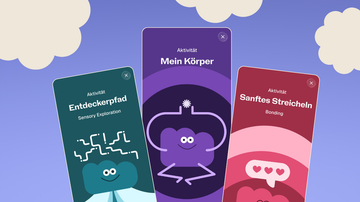
In der mo:mo App
Aktivitäten zur Selbstregulation für 12–18 Monate.
Wenn dein Kind häufig Wutanfälle bekommt, gibt es in der App 24 abgestimmte Aktivitäten, die helfen, Frustration körperlich zu kanalisieren — ohne dass es eine feste Methode braucht.
Aktivitäten ansehen