


Music is a natural part of the evening ritual in many families. Whether it's a sung lullaby, a music box, or soft background music, musical elements often intuitively accompany the transition into the night. But what effect does music actually have on babies' sleep? And how does it influence not only the child but also the accompanying caregiver?
Music as Regulation – What Happens in the Body
Music directly influences the nervous system. Especially slow, rhythmic music activates the parasympathetic nervous system – that part of the autonomic nervous system responsible for rest and regeneration. Studies show that soothing music can lower heart rate, slow breathing, and thus promote a state of physical relaxation.
This effect unfolds in both the baby and the accompanying adult. When humming or singing a lullaby, one not only calms the child but also regulates one's own body. This so-called co-regulation can be particularly helpful in stressful situations – for example, when falling asleep is difficult. One's own voice acts as an inner anchor: humming slows breathing, stimulates the vagus nerve, and noticeably reduces stress.
Why Babies Love Sung Language
Babies react particularly sensitively to sung language. Research shows that they concentrate longer on singing than on spoken language – and appear generally more attentive and emotionally balanced. Through its rhythm and predictability, singing provides a structure that the child's brain can orient itself by. This creates security.
The voice of the primary caregiver is of particular importance. It is recognized in the womb and acts as a familiar, calming signal after birth. Whether the singing "sounds good" is secondary – the emotional connection and the recognizability of the voice are paramount.
Lullabies as Cultural Bonding Rituals
Lullabies exist in all cultures. They are usually slow, repetitive, and melodic – a kind of musical sanctuary. In everyday life, they structure the transition from day to night.
For the child, this means: repetition, security, and a clear signal for the upcoming rest phase. The child's brain reacts particularly positively to this predictability – one reason why evening rituals prove so effective. A consistent song can thus become "conditioned security": it not only announces falling asleep but also conveys a sense of security.
White Noise, Music Boxes & Music Players – Useful Additions?
Technical aids such as white noise or calm music from music boxes and players can also have a calming effect – especially if they are firmly integrated into the bedtime ritual. White noise reminds of sounds from the womb and can also mask ambient noises.
Important to note: music should be used as specifically as possible – as a signal or ritual, not as constant background noise. The child's brain also needs periods of acoustic silence during sleep to reach deeper sleep stages.
Music – a Tool for Both
Music can therefore be much more than just a beautiful bedtime ritual. It offers babies orientation, promotes emotional security, and can help make the transition to sleep smoother.
At the same time, it can also be a tool for self-regulation for the accompanying parents – especially when falling asleep is difficult.
A simple lullaby, a soft hum, or a familiar rhythm can do a lot in such moments – without technology, but with a lot of closeness and connection.
You can find even more scientifically sound information on early childhood development from 0–3 years, over 650 activities, and much more in the mo:mo app.
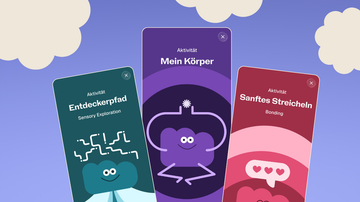
In der mo:mo App
Aktivitäten zur Selbstregulation für 12–18 Monate.
Wenn dein Kind häufig Wutanfälle bekommt, gibt es in der App 24 abgestimmte Aktivitäten, die helfen, Frustration körperlich zu kanalisieren — ohne dass es eine feste Methode braucht.
Aktivitäten ansehen