


Around the 4th to 6th month, many babies' sleep suddenly seems to change. Nights become more restless, falling asleep takes longer, and familiar routines no longer work. Often, the term sleep regression is mentioned. But what actually happens during this phase? We spoke with Luisa Straub about how baby sleep develops – and why this change is not a setback.
During the first year of life, babies' sleep patterns change significantly. Why is that?
For newborns, sleep is still random. They first need to develop a day-night rhythm and hardly produce any of their own melatonin – it comes from breast milk. Many parents tell me in consultations that their children were very easy sleepers in the first few weeks. But that doesn't say much yet. From the 3rd to 4th month, sleep patterns slowly settle. And even then, they change significantly.
Why is that?
Children process a lot during sleep, such as their emotional or cognitive development. Motor milestones, in particular, are strenuous to process, and many parents notice that progress in this area leads to more restless nights. Major changes such as starting daycare, a new sibling, or a move can also greatly affect sleep.
Are there periods when sleep patterns change particularly strongly?
This is tied to individual development. Many sleep consultants refer to this as sleep regression. This is not a medical term but refers to a temporary change in sleep behavior. Nights may become more restless, or falling asleep may suddenly take much longer. That's why many describe it as a "regression," or a setback, as it can appear to parents. This is particularly common around the 4th month, as this is when newborn sleep ends. It also occurs between the 6th and 8th, 8th and 10th, and around the 12th month.
These periods are quite broad.
That's intentional, as they are individual for each child and are only meant to provide a rough guide. When it comes to sleep, parents should focus less on timeframes and more on observing their child. Otherwise, bad moods or growing pains are sometimes attributed to a sleep regression.
What can help during such phases?
Sleep should adapt to the child, not the other way around. Many children actually get too little sleep, then become overtired, and falling asleep becomes problematic. Therefore, recognizing signs of tiredness is very important. Parents should also find out what their child needs to fall asleep. For example, very alert and stimulus-sensitive children often benefit from a low-stimulus and preferably darkened environment. Routines also help to bring calm in the evenings.
Many parents think before birth that babies simply fall asleep when they're tired. And then, preferably, for long stretches.
It's usually not that straightforward. There's this well-known saying: 9 months in the womb, 9 months on the chest, and 9 months on the leg. Babies need closeness, smell, and physical contact to feel safe. We all go through several sleep cycles at night and wake up briefly between phases. For babies in the second half of their first year, a sleep cycle lasts approximately 50 to 60 minutes. During these brief waking moments, they unconsciously check if the situation is still the same as when they fell asleep and if they still feel safe. This behavior is evolutionarily determined. The closeness of a familiar caregiver or a familiar sleep situation helps children to fall back asleep.
So, closeness is very important?
For most babies, closeness is a central need, even at night. This can become challenging later on when children are supposed to sleep in their own bed or in their own room. They fall asleep with company, wake up at night, and find themselves in a new situation. Many children then demand parental closeness again in such moments. This can be related to sleep associations, but it doesn't have to be. Often, it's simply a big change that brings new challenges and takes time.
In the first year, co-sleeping is recommended as protection against SIDS.
The official recommendation to reduce the risk of Sudden Infant Death Syndrome (SIDS) states that babies should sleep in their own bed in the parents' bedroom. This recommendation is interpreted and implemented differently in many countries, as international guidelines and cultural sleeping habits vary. In practice, many babies sleep in the family bed. Newer studies suggest that the risk of SIDS is not increased if certain safety criteria for safe co-sleeping in the family bed are observed. It is crucial that the chosen sleeping arrangement is consciously designed and suitable for the family.
You mentioned sleep associations. Many parents are afraid of "training" their baby to something they can't get rid of later.
That's true. Popular sleep aids at the beginning are rocking on a exercise ball, a swing cradle, a baby carrier, and of course breastfeeding or a bottle. In the first few weeks, anything that helps is allowed. Sleep is still very immature, and parents can hardly do anything wrong. From the second half of the first year, I recommend using sleep aids consciously: as little as possible and as much as necessary. The goal is not to omit support, but to design it in such a way that it gives the child security and remains manageable for the parents in the long term.
Do parents also let themselves be unsettled by outside influences? For example, by grandparents who say they are "spoiling" their child?
I don't hear much from the grandparent generation in my consultations. But I do hear from families with children of the same age. I always advise parents to stay true to themselves and not to look left and right too much. Everyone's pain threshold is also set differently. Maybe I'm totally overtired because my child wakes up 5 times a night. My friend's child also wakes up 5 times, but her tolerance level is different and she has no problem with it at all. That shouldn't be judged. Everyone is simply different here and comparisons are out of place.
Is there anything specific that helps parents stay calmer during restless sleep times?
It helps to analyze the day. Maybe the child isn't sleeping enough, is overtired in the evening, and therefore can't fall asleep. Or perhaps routines are missing, or the child can't calm down properly in the evening due to a lack of quiet. If nights are tough, parents should also use all available resources: involve their partner, enlist grandparents to take the baby for a walk while they sleep, and make time for self-care. Only then can parents regain their strength and recharge their batteries.
If you could give parents one thought about baby sleep in the first year, what would it be?
Being flexible with sleep, observing your own child, and recognizing signs of tiredness is often half the battle. One thing is also important to me: Many parents worry when their baby cries because they are afraid that the bond will suffer. But what matters is not whether a baby cries, but whether it is accompanied. Closeness, support, and reliability are not damaging to attachment - quite the opposite. And even the toughest sleep phases pass. For both sides.
You can find even more scientifically sound information on early childhood development from 0-3 years, over 650 activities, and much more in the mo:mo app.
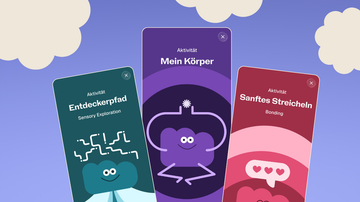
In der mo:mo App
Aktivitäten zur Selbstregulation für 12–18 Monate.
Wenn dein Kind häufig Wutanfälle bekommt, gibt es in der App 24 abgestimmte Aktivitäten, die helfen, Frustration körperlich zu kanalisieren — ohne dass es eine feste Methode braucht.
Aktivitäten ansehen