

Reading time: 5 min
Nights with a baby can feel endless. As soon as they fall asleep, they wake up again. Many parents wonder in such moments if something is wrong or if their child first needs to "learn" to sleep. The good news is: babies can sleep from the beginning. Their sleep just looks different from that of adults – and that sometimes makes it challenging for parents.
How Babies Sleep
Babies' sleep follows its own patterns. While adults go through sleep cycles of 80 to 120 minutes, for babies in their first year, it's only about 60 minutes. It's only between their 5th and 6th birthday that cycles extend to around 90 minutes.
Each cycle consists of two states: active REM sleep and non-REM sleep.
In REM sleep, the child breathes irregularly, moves their arms and legs, or shows small facial expressions like the familiar "angel smile." During this phase, memory, the nervous system, and self-regulation develop.
Non-REM sleep includes the falling-asleep phase, light sleep, and deep sleep. Here, the child is calm, breathes regularly, and the body recovers.
Especially in the first few months, babies spend almost half of their sleep time in REM sleep. This makes their sleep seem lighter, and they wake up more quickly.
Why Babies Wake Up at Night
Adults also wake up several times at night, but rarely remember it and fall back asleep immediately. Babies do the same, but they still need the reassurance that their caregiver is there.
Waking up at night is therefore a protective mechanism. The child unconsciously checks: Is someone nearby? Does the environment feel safe? With time and loving guidance, they learn to transition from one sleep cycle to the next without fully waking up.
Additionally, many external factors influence sleep: teething, growth spurts, infections, or new situations like starting daycare. All of this can lead to more restless nights – without anything "going wrong."
Sleep Myths and Why They Are Not True
One of the most persistent myths is: "Babies first need to learn to sleep." That's not true. Sleep is not a skill that needs to be trained. Children sleep from the beginning. They just need different support than adults.
Another myth is "sleeping through the night by three months." Some babies do indeed sleep for longer periods, but many do not. This is due to their biological development and not a lack of ability.
The idea that a child only needs to be tired enough to sleep through the night without problems often leads astray. Overtiredness can even make falling asleep more difficult.
Why Letting Babies Cry It Out is Problematic
Sleep training is very common in some countries. The most well-known are the Cry-it-out method and the Ferber method. Both are based on parents not responding immediately to crying.
- With the Cry-it-out method, the child is put to bed and left alone, even if they cry.
- With the Ferber method, parents let a certain amount of time pass before reacting. This time is progressively extended.
Studies show that these methods significantly increase babies' stress levels. Heart rate and cortisol levels rise, and oxygen supply decreases. Even if children seemingly fall asleep calmly after some time, it does not mean they are relaxed. Rather, they have stopped asking for help.
Silence is often interpreted as "success," but it is more a sign of resignation. Sleep then does not arise from trust, but from a biological emergency program.
Sleep is not a skill that needs to be trained
Babies can sleep from the beginning. They just do it differently. Shorter cycles, a strong need for closeness, and the constant development of their brain make sleep more restless.
So it's not about teaching children to sleep. It's much more important to support the natural sleep process, provide security, and strengthen trust.
Attachment-oriented support
Instead of relying on training, parents can trust attachment-oriented support. This means: perceiving signals, reacting sensitively, and creating routines.
- Provide closeness: Physical contact, cuddling, or falling asleep together convey security. Cuddling with the konnektor can also help with falling asleep.
- Maintain rituals: Recurring routines help transition into sleep. Read our article on lullabies for more information.
- Create a sleep environment: Darkness, a pleasant temperature, and quiet facilitate falling asleep.
- Take needs seriously: Crying is communication, not "training."
Attachment-oriented sleep support does not mean that parents can never be exhausted. It means that the child feels: Someone is there for me.
Detailed information on sleep can be found in the mo:mo app.
Sleep Consultations – What to Look For?
Sometimes nights are so challenging that external support is helpful. In Germany, there are now many sleep consultants who work with an attachment-oriented approach.
When choosing, pay attention to the following points:
- There is evidence of training or certifications.
- You feel well taken care of in the initial consultation.
- No quick miracle solutions are promised.
- It is not recommended to let the child cry.
A good sleep consultation involves the whole family and seeks individual solutions that are realistic and implementable.
Tips for Everyday Life
Sleep is a sensitive topic because it affects everyone's well-being. Parents often benefit from remaining pragmatic. What matters is not the perfect theory, but an everyday life that works.
Some families sleep together in a family bed, others have the child in their own bed in the same room. Some children need long sleep guidance, others fall asleep after a short story. Every family finds its own way.
It is helpful to regularly check:
- Do the sleeping times still match the child's current rhythm?
- Do you feel comfortable with the sleep guidance?
- Does everyone get enough sleep, even if it looks different than expected?
Sleep remains flexible in the first few years. It is important to stay flexible and to keep looking for what works best for everyone.
FAQ about Baby Sleep
When do babies sleep through the night?
There is no fixed time. Many children wake up at night until preschool age.
How much sleep do babies need?
Newborns up to 18 hours, spread throughout the day and night. At 1 year old, about 12 to 16 hours, usually with one or two naps.
Does letting babies cry it out help them sleep through the night?
No. Even if children become quiet, their stress level remains high. In the long term, it harms bonding and trust.
What is the difference between sleep training and sleep consultation?
Training relies on crying it out or delayed response. Consultations work in an attachment-oriented way and seek individual solutions.
Can sleep worsen again?
Yes. Developmental spurts, teething, or new life situations can lead to more restless nights. This is normal and will pass.
Conclusion
Baby sleep is different from adult sleep, but not worse. Frequent waking is part of it and fulfills an important protective function. Letting babies cry it out may bring short-term peace, but it creates stress and weakens trust.
With closeness, rituals, and secure guidance, children gradually learn to find peace at night. And parents gain the most important thing: the confidence that their child can sleep – in their own, healthy way.
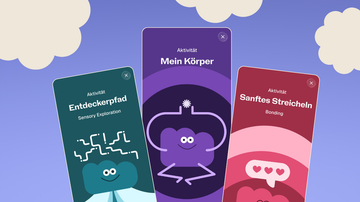
In der mo:mo App
Aktivitäten zur Selbstregulation für 12–18 Monate.
Wenn dein Kind häufig Wutanfälle bekommt, gibt es in der App 24 abgestimmte Aktivitäten, die helfen, Frustration körperlich zu kanalisieren — ohne dass es eine feste Methode braucht.
Aktivitäten ansehen