


Addressing Developmental Concerns: When Is Support Truly Beneficial?
Too much advice, too little clarity? You observe your child, watching them discover the world – and sometimes quietly wonder if everything is "on track." Comparing them to other children in your circle of acquaintances or online can quickly lead to feelings of uncertainty. We want to alleviate this worry and show you how you can calmly and informedly guide your child's development. Here, you'll learn what normal developmental steps are and when a gentle nudge or a professional assessment might be helpful.
Understanding Your Child's Development: Between Milestones and Individual Paths
It's a feeling almost all parents know: the quiet concern about whether their child is developing "correctly." This uncertainty is understandable, as every child has their own pace. Modern research confirms this: development doesn't follow rigid paths, but rather individual bursts and phases.
An important guide for professionals is the so-called "Grenzsteinprinzip" (boundary stone principle). Don't think of it as a strict rule, but as a gentle stop sign. A boundary stone marks the point at which 95 percent of all children have learned a certain skill. If a child hasn't reached this point yet, there's no need to panic. It's simply an indication for pediatricians to take a closer look and offer support if needed. It's a tool for early detection, not a diagnosis.
Data from the comprehensive KiD 0-3 study (2022) shows that approximately 14% of children under three years old exhibit age-inappropriate development in at least one area. So, you are certainly not alone with your questions.
Developmental Check: When is it Curiosity and When is it a Reason to Look Closer?
Instead of pressuring yourself with rigid checklists, try to view your child's development as a whole. It's about loving observation, not evaluation.
Common Myths That Cause Uncertainty
Many half-truths circulate on the internet and in parent groups, such as the following:
"Bilingualism overwhelms my child and leads to delays."
False. Studies show that children growing up multilingual sometimes mix words from both languages, but in the long term, they even have cognitive advantages. They learn to think more flexibly. A delay solely attributable to bilingualism is a debunked myth.
"They'll grow out of it."
This sentence is often well-intentioned, but not always helpful. While many phases do indeed pass, early support is crucial for genuine developmental delays. The boundary stone principle helps precisely here to distinguish between a temporary phase and a potential need for support. Unnoticed difficulties can otherwise become entrenched.
"Strong emotional outbursts are just a tantrum phase."
The autonomy phase is an incredibly important developmental step in which your child discovers their own will. Strong emotions are normal here. However, if you notice that your child is extremely caught up in their anger, hurting themselves or others, or if you as a parent are reaching your limits, it may be helpful to seek support to find new ways of dealing with these big emotions together.
Your Guide: From Observation to Support
If you are unsure, there is a clear and gentle way to gain clarity. This triad has proven effective:
- Loving observation: Use our mo:mo App to understand and record your child's developmental steps. This helps you get a feel for your child's individual pace, beyond external pressure.
- Get an initial assessment: Do you need quick, trustworthy advice? That's exactly why we developed Ask mo:mo. In the app, you can ask our AI assistant your questions. It exclusively draws on scientifically sound findings on child development and provides you with an initial, well-founded orientation – discreetly and available at any time.
- Seek professional advice: If your concerns persist, your pediatrician is the first point of contact. They can professionally assess development and, if necessary, refer you to specialized facilities such as early intervention centers, speech therapists, or occupational therapists.
FAQ: Your Most Frequent Questions About Developmental Concerns
What exactly does early intervention mean?Early intervention is a free service for families whose children need support in their development. In playful therapy sessions, the child's abilities are holistically promoted – always based on their strengths.
Am I doing something wrong as a parent?No. Developmental trajectories are complex and have diverse causes. Your concern shows how much you love your child. Seeking support is a sign of strength and care, not failure.
How can the mo:mo App specifically support me?The mo app is your daily companion. It not only provides you with over 650 age-appropriate play ideas but also helps you better understand your child's development and categorize your questions with milestone tracking and Ask mo:mo.
Why This Is Important: The Facts in Brief
- Development is individual: Just because a child reaches a milestone later doesn't automatically mean there is a disorder.
- The boundary stone principle is a tool: It marks the point at which 95% of children have acquired a skill. It serves as an indication for experts to look closer – it is not a diagnosis.
- Early support works: If a real need for support is recognized in time, small nudges can achieve great things and set the course for positive development.
Note: This article is for informational purposes only and does not replace medical advice. If you have specific concerns about your child's health or development, please always contact your pediatrician or another qualified professional.
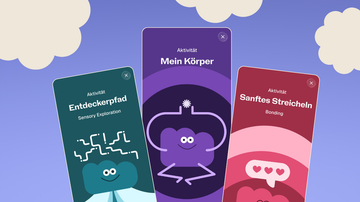
In der mo:mo App
Aktivitäten zur Selbstregulation für 12–18 Monate.
Wenn dein Kind häufig Wutanfälle bekommt, gibt es in der App 24 abgestimmte Aktivitäten, die helfen, Frustration körperlich zu kanalisieren — ohne dass es eine feste Methode braucht.
Aktivitäten ansehen