


Reading time: 3 min
There are days when you feel like time stretches endlessly.
The child is whiny, the mood sours, and your mind is already running through a list of possible activities: puzzle, walk, mud kitchen, book.
Many parents know this reflex: do something immediately to make the child happy. This isn't impatience, but the desire to do well. And yet, this "always offering something" is often too much.
Children don't need constant entertainment. They need space to experience themselves.
Why parents so often feel they have to do something
In everyday life with children, something is constantly happening: noises, appointments, stimuli.
Rarely do real breaks occur in between. When it becomes quiet, it feels unusual. Almost wrong.
Parents sense this moment immediately. And fill it before the child can use it.
Sometimes the pressure also comes from outside. Ideas, lists, tips everywhere. On social media, every child seems busy, stimulated, creative. So "doing nothing" quickly feels like a failure.
But children need precisely this emptiness. In it, something of their own arises – interest, idea, calm.
When too much programming makes you tired
Children can only absorb if their brain has time to sort what they have experienced.
If there's something going on all day, there's hardly any room for that.
Overwhelm rarely manifests loudly: A child who cries seemingly without reason or can't sleep may simply have gathered too many impressions.
Learning happens not only in action, but in breaks. Rest is not stagnation, but processing.
Boredom is not a problem
Many parents are startled when their child says, "I'm bored." Yet, boredom opens up space.
It often gives rise to the best ideas – when children start to build, observe, or dream. And even if nothing comes of it, it's valuable.
Because the child feels that they find something within themselves.
Simply observe
Sometimes it's enough to just be there. Without suggestions, without guidance. Children notice when they are left in peace and at the same time seen.
Observing doesn't mean being passive. It means staying attentive. Watching how the child tries something, fails, tries again.
Those who don't intervene but show trust strengthen the feeling: I can do this myself.
When less is more
Children don't need new impressions every day. They benefit much more from experiencing familiar things over and over again.
Too many offers can be overwhelming. Toys, courses, noises – all are stimuli that want to be processed. A little slowness often feels like a deep exhale.
It's enough for parents to be present. Not perfect, not creative, just there.
What can help parents
- Try to endure silence. Children often fill it themselves.
- Pay attention to signals: If your child withdraws, they may simply be saturated with impressions.
- Less choice helps. A few familiar things are enough.
- Look, without judging. That alone strengthens connection.
- Give yourself breaks – children sense when you are calm.
In the mo:mo App you will find impulses for calm everyday moments that give children space to discover.
When doing nothing is difficult
Parents want to shape. It's in our nature to want to help. But children don't need a constant audience. They need adults who trust them to find their own way.
It's okay to be bored. It's okay to be quiet. That's not a sign of disinterest, but of trust.
Conclusion
Children grow not through constant activity, but through time. Time to observe, reflect, and try.
Sometimes the most valuable thing parents can do is nothing at all. Just be there.
Frequent questions from parents
Do I have to constantly entertain my child?
No. Children have a natural need for self-activity. If you let your child do their own thing, new things will emerge naturally.
Is boredom good for children?
Yes. It fosters creativity and independence. Their own ideas emerge from it.
How do I know if my child is overwhelmed?
If they become restless, irritable, or clingy, it can be a sign of overstimulation. Then peace and closeness help.
How do I stay calm if I get bored myself?
Breathe, watch, take your time. It's unusual to do nothing – but it changes your perspective.
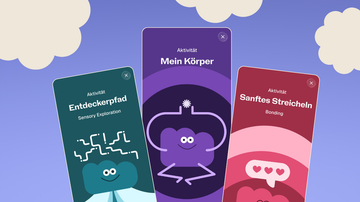
In der mo:mo App
Aktivitäten zur Selbstregulation für 12–18 Monate.
Wenn dein Kind häufig Wutanfälle bekommt, gibt es in der App 24 abgestimmte Aktivitäten, die helfen, Frustration körperlich zu kanalisieren — ohne dass es eine feste Methode braucht.
Aktivitäten ansehen