

Reading time: 6 min
Children explore their world with their whole body. Every turn, every step, and every run is a part of development. Movement is therefore not an addition, but a basic need. It promotes not only physical maturation but also language, thinking, emotions, and relationships.
Read here why movement is so important even in infancy, what role rough-and-tumble play has in development, and how parents can integrate movement into daily life.
Movement as the Foundation of Development
From the first wiggles as a baby to wild running on the playground: movement accompanies every developmental phase. Even when babies crawl or pull themselves up, they train muscles, practice balance, and connect nerve cells in the brain.
In toddlerhood, movement becomes a central learning area. Children balance, climb, run, and jump – and in doing so, gain a sense of their body. These experiences are the basis for finding their way in the world and building confidence in their own abilities.
Movement influences many areas of development:
- Motor skills: Children learn to control movements purposefully.
- Cognition: Movement experiences promote spatial thinking and logical connections.
- Emotions: Romping makes one happy, reduces stress, and builds self-confidence.
- Social behavior: Movement games bring children into contact, promote cooperation, and help them understand rules.
Rough-and-tumble play: More than just letting off steam
Rough-and-tumble play often seems unstructured to adults, but for children, it is an important learning field. When toddlers run, jump, or laugh exuberantly, they experience the possibilities of their bodies. They feel how strong they are, how fast they can run, or how high they can jump.
These experiences strengthen courage and self-esteem. Rough-and-tumble play is also a vent for energy: after an intense play phase, many children find it easier to concentrate again or calm down. Rough-and-tumble play is thus a natural balance of activity and relaxation.
Movement and Brain Development
Motor skills and cognition are closely linked. Every new movement not only trains muscles but also the brain. When climbing, balancing, or playing ball, sensory impressions such as sight, hearing, and balance are connected.
Studies show:
- Children with diverse movement experiences often develop a larger vocabulary.
- Movement supports attention and memory.
- Physical activity and language development are closely connected.
- Movement is therefore more than physical activity; it is a catalyst for learning.
Movement in Everyday Life: Recognizing Opportunities
Parents don't need to attend special courses to encourage movement. Even small daily opportunities are enough:
- Taking the stairs instead of the elevator.
- Walks with space to run and balance.
- Using playgrounds to allow climbing, swinging, and hanging.
- Ball games are particularly effective. Even toddlers can roll soft balls, try their first kicks, or attempt to catch something.
Rough-and-tumble play and bonding
Movement is not just exercise, but also a relationship. When parents roughhouse with their children, run together, or play ball, closeness is created. Joy, laughter, and physical contact release oxytocin: the hormone that supports trust and connection.
A daily rough-and-tumble game in the garden, a regular ball session with the bouncing buddy, or a shared climbing adventure at the playground: such recurring rituals show children that movement means joy – and that they are not alone in it. Bonding and movement go hand in hand.
Movement and Health
Children who move regularly develop strong muscles and bones, stable posture, and a healthy metabolism. Movement strengthens the cardiovascular system, improves coordination, and has a positive effect on overall well-being.
Many parents also report: children who are sufficiently active throughout the day sleep more deeply and appear more balanced. Movement is therefore a key to physical and mental balance.
The World Health Organization recommends at least three hours of movement daily for preschool children. This time is spread throughout the day: through free play, rough-and-tumble breaks, walks, and everyday activities. The key is not perfection, but regularity.
Tips for Parents: Promoting Movement in Everyday Life
Movement is easier when it becomes part of family life. The practical thing is: it doesn't require extensive preparation, but arises from doing.
- Create spaces where children can crawl, hop, and run.
- Incorporate movement into rituals: for example, a regular rough-and-tumble session after nap time.
- Offer safe indoor movement opportunities: pillow landscapes, mattresses, or small obstacle courses.
- Utilize every outdoor opportunity: garden, park, or playground become natural spaces for movement.
- Be a role model for movement yourself: children are guided by the joy parents radiate when they are active.
In the mo:mo app, you'll find activities for every age from 0-3 years that bring movement into your life.
FAQ: Movement and Rough-and-Tumble Play in Toddlers
How much movement does a toddler need?
The WHO recommends about 3 hours daily, spread over many short and longer periods.
When can children start playing ball?
As early as around one year old. With soft, easy-to-handle balls like the bouncing buddy, they can roll, kick, and try to catch for the first time.
Does movement also help with learning?
Yes. Movement experiences promote language, memory, and concentration.
What to do if children are very restless?
Often, it's a need for movement. A short rough-and-tumble break – running, jumping, or playing ball – helps release energy.
Can you also roughhouse indoors?
Yes. With cushions, pillows, or a small movement landscape, safe spaces can be created.
Conclusion: Movement is Development
Movement is more than just sport. It is a cornerstone of child development, a motor for learning, and a way to strengthen bonding. Children who are allowed to run, climb, jump, and roughhouse develop self-confidence, concentration, and joy in their bodies.
Parents can support this process by consciously enabling movement. With small rituals that fit into everyday life, and with games like the bouncing buddy, which makes first ball games accessible even for toddlers, an environment is created where movement becomes natural.
Thus, every jump and every turn becomes a piece of development – and every shared movement becomes a moment of closeness.
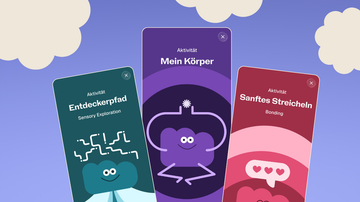
In der mo:mo App
Aktivitäten zur Selbstregulation für 12–18 Monate.
Wenn dein Kind häufig Wutanfälle bekommt, gibt es in der App 24 abgestimmte Aktivitäten, die helfen, Frustration körperlich zu kanalisieren — ohne dass es eine feste Methode braucht.
Aktivitäten ansehen