

Reading time: 4 min
Many parents know the situation: as soon as the baby is in the stroller, it starts to cry. But in your arms, everything is immediately fine. It seems as if closeness is the only way to peace. What at first glance seems exhausting is, in truth, a sign of deeply rooted instincts.
Babies are not "nest deserters" who want to lie alone. They are carry-on babies – instinctively attuned to physical contact and movement from birth. The need for closeness is not about "wanting to be spoiled," but is part of their biology.
Why closeness is vital
In the first months of life, babies need more than food and warmth. They need a sense of security. Closeness, movement, and touch signal: I am protected, someone is taking care of me.
The Moro reflex, which many newborns exhibit, is a fascinating remnant of evolution. When babies suddenly spread their arms as if wanting to hold on, an ancient reflex shows itself: it once served to cling to the mother's body when she moved or was startled.
This reflex pattern is part of deep human attachment biology. It explains why many babies become restless when lying down and only calm down when carried or held.
Carrying satisfies primal needs
Carrying a baby – whether in your arms or in a baby carrier – fulfills several basic needs at once: it provides security, regulates heart rate, breathing, and even temperature. Physical contact ensures that hormones like oxytocin are released, which promote calm and connection.
Closeness is not a luxury, but essential for development. Numerous studies show that babies who are frequently carried and touched cry less, calm down faster, and sleep better.
How you can support highly sensitive babies is described in our blog post.
Why the stroller can sometimes be too much
A stroller is practical – but for a baby, it's often an overload of stimuli. Strange noises, changing light conditions, and the distance to the primary caregiver can be unsettling. Especially in the first few months, when the nervous system is still immature, the closeness of a trusted person helps process stimuli and feel safe.
The fact that a baby prefers to be carried rather than lie in a stroller is not a sign of "being spoiled," but an expression of its attachment system. Babies who hold on and seek closeness are following their internal security program.
Spoiling through closeness? A myth
The phrase "You'll spoil your baby if you carry them too much" persists stubbornly – and is wrong. A baby cannot be spoiled by love, attention, and physical contact. Closeness fulfills a need; it is not a reward.
When a baby cries, it's never without reason. It calls for security, comfort, or closeness. Responding to this does not strengthen dependence, but trust. This basic trust forms the basis for independence: children who know that their needs are seen can later detach themselves more freely.
Touch as the language of attachment
Touch is the first form of communication. Even before babies can speak, they connect through skin contact. Every gentle touch communicates something: "I am here, you are safe."
With conscious moments of touch, attachment can be strengthened – not only in everyday life, but also in quiet rituals. This is exactly what the mo:mo connector was developed for: a soft stroking brush that makes loving touch even more consciously experienced for babies and toddlers. Whether falling asleep, after bathing, or during small breaks – such rituals promote closeness, relaxation, and trust.
You can find out more about how touch strengthens babies in their development in the mo:mo app, which accompanies parents in the first phase of life and provides impulses for everyday situations.
When closeness becomes challenging
As much as closeness is good, it can also be exhausting. Constant carrying strains the body, especially in the first few months. It's important that parents allow themselves breaks and find ways to integrate closeness into everyday life without overtaxing themselves.
A baby carrier can provide relief. Even short periods of physical contact – when falling asleep, changing diapers, or playing – are valuable. It's not about constantly being on the move, but about babies experiencing closeness regularly.
The mo:mo app offers inspiration for such everyday situations: small, developmentally appropriate activities that promote bonding and body awareness, without pressure or effort.
What parents should know
Babies are not mini-adults. Their brains are programmed to experience security through physical contact. If this need is met, stress hormones can regulate better. Closeness stabilizes the child's nervous system – an important prerequisite for emotional maturity.
This also means: a baby who needs a lot of closeness is not doing anything wrong. It shows that its attachment system is working. And parents who respond to this do more than comfort: they lay the foundation for trust, self-regulation, and empathy.
Conclusion
When babies cry in a stroller, it's not a sign of dissatisfaction, but an expression of an ancient instinct. They need physical contact, movement, and security to feel safe.
Carrying, touching, giving closeness: all of this is not spoiling, but fulfilling a basic need. Whoever understands that babies are carry-on babies can consciously enjoy this time and knows: with every touch, attachment grows.
Further insights into early development, sensory perception, and attachment can be found in our mo:mo expert blog.
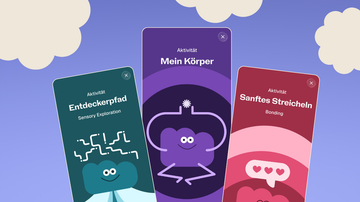
In der mo:mo App
Aktivitäten zur Selbstregulation für 12–18 Monate.
Wenn dein Kind häufig Wutanfälle bekommt, gibt es in der App 24 abgestimmte Aktivitäten, die helfen, Frustration körperlich zu kanalisieren — ohne dass es eine feste Methode braucht.
Aktivitäten ansehen