


Reading time: 5 min
Introducing complementary foods is one of the most exciting moments in the first year of a baby's life. The little milk-fed infant transforms into a baby curious about tastes, textures, and family rituals. At the same time, hardly any topic is associated with so much uncertainty. Parents ask themselves: When is complementary feeding appropriate? Does it have to be purée, or is finger food better? And what if the baby doesn't want to eat?
Answers to these questions are important – not only for satiety, but also because the way food is introduced can be crucial for the child's later relationship with food.
When is complementary feeding appropriate?
The World Health Organization (WHO) recommends exclusively breastfeeding or formula-feeding babies for the first 6 months. After that, complementary foods can be introduced. But: Not every child is at the same stage at 6 months. Some show clear interest as early as 5 months, while others are not ready until 7 months.
Key indicators are developmental readiness signs: the baby can hold their head steadily, can sit with support, and the tongue-thrust reflex has disappeared, meaning they no longer push food out of their mouth. Such signals are more reliable than a rigid calendar.
A common misconception is that babies sleep better with complementary foods. Studies show that sleeping through the night does not depend on purée or finger food, but on neurological development. Even if parents wish for more restful nights – starting complementary foods is not the key.
Classic approach: Purée
For many years, purée was the standard. Most often, one starts with a vegetable purée, followed by combinations of vegetables, potatoes, and meat. Later, milk-cereal and fruit-cereal purées are added.
The advantages are obvious: purée is easy to portion, it is soft, easy to spoon, and provides targeted nutrients. Many parents find the solid structure helpful because it provides security. Critics argue that babies experience less autonomy with purée. Parents decide how much is eaten, and eating occurs passively.
Nevertheless, purée remains a good option for many families – especially if they value predictability. You can read how to feed your baby correctly and which routines help at the beginning in the mo:mo app.
Modern Alternative: Baby Led Weaning (BLW)
With Baby Led Weaning – often abbreviated as BLW – purée is omitted. Instead, the baby receives finger foods in soft, easy-to-grasp pieces. Cooked carrot sticks, ripe pear, or soft-steamed broccoli florets are typical examples. The child decides for themselves what and how much they eat.
BLW promotes independence because babies use their hands to examine, feel, smell, and bring food to their mouths. At the same time, they learn early on to recognize their own satiety signals. Many parents report that their children accept a wider variety of tastes through BLW because they actively discover food.
Of course, there are also uncertainties. Many parents fear choking. However, studies show that the risk is no higher than with purée, provided that foods are offered in an appropriate form. Hard vegetables, whole nuts, or sausages are taboo. BLW works when food is soft enough and easy for small hands to grasp. You can find out which foods are particularly suitable and how to prevent choking in the mo:mo app.
The flexible middle ground: Mixed complementary feeding
More and more families today choose a hybrid approach. In the morning, there might be a few spoons of purée, in the evening, the baby reaches for steamed vegetable sticks. This approach combines the advantages of both methods: purée provides security and predictable nutrients, while finger food promotes independence and the joy of discovery.
This flexibility takes the pressure out of the decision. Parents don't have to commit to one side but can try what works best for them and their child.
What matters in complementary feeding
Regardless of the form, what remains crucial is how parents support the process. Eating is a learning process. Babies don't have to eat entire portions immediately. Often, it's just a few spoonfuls or bites at the beginning.
It's important that eating remains relaxed. Pressure or comparisons with other children quickly lead to frustration. If a baby initially only plays, crushes the food, or spits it out again, that's part of the process.
A healthy diet is not the result of one meal, but of many opportunities. Variety, calm, and joy are more important than rigid rules. You can find more on this idea in our article Healthy eating: Without pressure at the family table.
Nutrients in complementary foods
Complementary food is not just a question of "how," but also of "what." Around 6 months, babies' iron stores begin to deplete. Iron-rich foods – such as meat, lentils, or oats – are therefore important.
Protein, healthy fats, and vitamins also contribute to development. Vegetables provide fiber and phytochemicals, while fruit adds variety in taste and color. Cereal products contain energy and minerals.
Whether purée or finger food: a balanced mix ensures that children are introduced to a diverse range from the beginning.
Myths about complementary feeding
Many pieces of advice that parents hear do not stand up to closer scrutiny.
"Purée will finally make your baby sleep through the night." – Not true. Sleep is a developmental issue, not a nutritional problem.
"Finger food is dangerous." – Not if it's soft and easy to handle. The risk of choking is no greater than with purée.
"A baby must eat an entire portion." – False. Milk remains the main food source in the first year. Complementary food is a supplement and a learning experience.
Such myths only increase pressure. It's better to pay attention to the child's signals and support their development step by step.
How families can organize their daily lives
Complementary feeding is easier when it becomes part of daily family life. The baby sits at the table, watches others eat, and is allowed to participate. This creates rituals and a natural approach to nutrition.
Parents also benefit from routine: fixed meal times, a structured daily schedule, and clear roles make it easier to get started. Flexibility remains important. Some days go better, on others the baby may hardly try anything. Both are normal.
Practical tips help in everyday life: offer food calmly, avoid distractions, serve small portions. Eating situations are not a test, but an opportunity for closeness.
Frequently asked questions about complementary feeding
When is the best time to start?
Between 5 and 7 months, when signs of readiness are present. You can find more information in the mo:mo app.
How long does milk remain the main food?
Milk is central throughout the entire first year. Complementary food supplements, but does not immediately replace it.
Can a baby eat vegetarian?
Yes, if the diet is varied and iron sources are taken into account.
What to do if the baby refuses complementary food?
Keep trying, without pressure. Sometimes children need more time to get used to textures.
How important is a fixed complementary feeding plan?
Plans provide guidance, but the child is key. Flexibility helps to avoid pressure.
Is BLW better for development?
Not necessarily better, but it promotes independence and motor skills. Purée promotes other aspects. Both approaches are possible.
Conclusion
Introducing complementary foods is a process that requires patience, composure, and trust. Whether purée, BLW, or a mixed approach: what matters is not the method, but the attitude. Children need time to learn, and parents need courage to embrace their baby's individual journey.
With calm, variety, and shared rituals, eating becomes a positive experience that leaves a lasting impression.
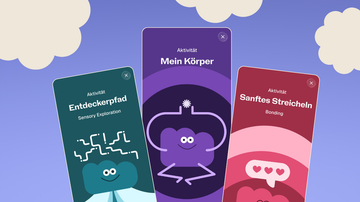
In der mo:mo App
Aktivitäten zur Selbstregulation für 12–18 Monate.
Wenn dein Kind häufig Wutanfälle bekommt, gibt es in der App 24 abgestimmte Aktivitäten, die helfen, Frustration körperlich zu kanalisieren — ohne dass es eine feste Methode braucht.
Aktivitäten ansehen