

Reading time: 4 min
In English, they are called the Terrible Twos; here, they are known as the defiance phase – at mo:mo, we prefer to call it the autonomy phase. Because what looks like resistance is, in fact, a developmental step: your child discovers their own will.
Around 18 months, many children begin to want to do things themselves: get dressed, decide what to eat, or where to go. If that doesn't work, frustration is inevitable. Tantrums, tears, or screaming are completely normal and even important during this phase. They show that your child is beginning to develop a sense of self and independence.
The brain learns to sort feelings
Behind the autonomy phase is not "difficult behavior," but biology. The prefrontal cortex – the part of the brain that controls impulses and regulates emotions – is not yet mature in toddlers.
When a conflict or overstimulation occurs, the amygdala, the brain's alarm system, kicks in first. It releases stress hormones, heart rate and breathing increase, and the child reacts instinctively: screaming, kicking, crying. Only much later does the prefrontal cortex intervene and try to regulate the situation.
In short: the body is already on high alert before thinking comes into play.
Why anger and frustration are important
Children first need to learn to recognize, name, and regulate their feelings. This doesn't happen through explanations, but through repeated experiences and the reactions of their caregivers.
A child who is allowed to be angry and is accompanied through it learns: I am allowed to feel. My feelings are okay. And they will pass.
When adults sensitively guide these processes, emotional security develops. This is the basis for resilience, meaning the ability to deal with stress and challenges.
That's why tantrums are not parenting mistakes, but learning opportunities.
You can read how to effectively guide and de-escalate conflicts with words in this blog post.
Accompanying instead of judging
During a tantrum, a child cannot communicate rationally. Logical explanations or phrases like "It's not that bad" do not reach them at that moment. It's better to simply be there, stay calm, and provide security.
It is also important for children to feel: feelings are allowed – but actions have limits. Anger yes, hitting no.
Once the situation has calmed down, parents can talk about what happened together. In this way, the child gradually learns to categorize their own feelings.
In the mo:mo app, you will find many impulses on how to accompany such moments in everyday life: with language, touch, and small routines that help to regain balance.
The autonomy phase as a developmental opportunity
Tantrums, frustration, or withdrawal are part of learning. Your child tests their limits, tries out how far they can go – and how self-determination feels.
These experiences are important for building self-confidence and developing inner strength. Children who experience that their feelings are perceived also learn to empathize with others later on.
In our blog post with psychologist Ceren Palik, you will find more background information on why this phase is so crucial for emotional development and attachment.
Tips for parents
- Stay calm, even if your child gets loud. Your composure helps them calm down.
- Take feelings seriously. Say what you observe: "You're angry because I said no."
- Offer closeness, but don't force it. Sometimes distance helps, sometimes a hug.
- Talk about it later, not in the middle of a tantrum. Only when peace returns can the child listen.
- Create predictable routines: routines provide security and help regulate emotions.
- Use small rituals of touch, such as gentle stroking with the connector, to promote relaxation before a situation escalates.
FAQ on the autonomy phase
When does the autonomy phase begin?
It usually appears between 18 and 24 months. The exact timing varies from child to child. Some start earlier, others later, which is completely normal.
How long does the autonomy phase last?
It generally accompanies children until about their 3rd or 4th birthday. In a milder form, it can also occur later when new developmental steps are due.
Why does my child suddenly have tantrums so often?
Tantrums arise when children are overwhelmed – emotionally, physically, or verbally. They often don't yet know how to express or regulate frustration.
How can I calm my child during a tantrum?
Stay calm, offer closeness, and avoid long explanations. Instead, say in simple words that you are there. When the anger subsides, you can talk about what happened together.
Should tantrums be ignored?
No. Even when children are upset, they need to feel seen and understood. Ignoring can reinforce insecurity. It is better to be there, stay calm, and maintain boundaries.
How can I help my child better understand feelings?
Talk about emotions, yours and your child's. Name feelings and show that all feelings are allowed. Small rituals, for example, touches with the connector, additionally help to reduce stress and feel closeness.
Conclusion
The autonomy phase is not defiance, but an important step towards independence. It shows that your child is developing, discovering their will, and learning to deal with emotions.
Parents who understand and accompany this process lay the foundation for emotional stability and trust. Anger and frustration are part of it: they are an expression of growth.
In the mo:mo app, you will find many ideas on how to accompany this phase in everyday life – sensitively, practically, and child-friendly.
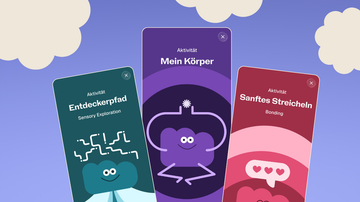
In der mo:mo App
Aktivitäten zur Selbstregulation für 12–18 Monate.
Wenn dein Kind häufig Wutanfälle bekommt, gibt es in der App 24 abgestimmte Aktivitäten, die helfen, Frustration körperlich zu kanalisieren — ohne dass es eine feste Methode braucht.
Aktivitäten ansehen