


Reading time: 4 min
Attachment is the foundation for trust, security, and healthy development. Parents often ask themselves: Which rituals strengthen the bond in everyday life? And how can small routines help children experience security and closeness?
The Cuddle Hormone: Oxytocin
Oxytocin is often referred to as the cuddle hormone. It is released when parents touch, breastfeed, cuddle, or massage their baby. It reduces stress, promotes well-being, and supports social relationships. Regular touch has a positive effect on attachment. It helps children relax and shows them: I am safe. I am welcome here.
Basic Trust: The Foundation for Secure Attachment
Even newborns seek closeness. Whether a child is securely attached depends heavily on how caregivers respond to their needs. John Bowlby and Mary Ainsworth's attachment theory shows: reliability and sensitivity are crucial.
You can read more about this in our blog post about mirroring feelings, where we explain how sensitive reactions deepen the parent-child relationship. You can read about the subtle signals parents can perceive even in infants in this blog post.
Those who can build basic trust in the first years of life feel secure in relationships. This trust acts as a foundation for their entire life.
Everyday Rituals: How Attachment Grows Step by Step
Rituals provide children with orientation and make attachment tangible in everyday life. Here's how you can deepen the bond a little more every day:
- Skin-to-skin contact from the start: Skin-to-skin contact soothes and promotes closeness.
- Care as an opportunity for bonding: Bathing, changing diapers, and moisturizing are more than just routines. With eye contact and a calm voice, they become valuable rituals.
- Baby massages and caresses: They promote body awareness and relaxation. With the mo:mo konnektor, parents can consciously shape touch.
- Responding to needs: When babies experience that parents recognize and respond to their needs, they feel seen and secure. You can read about the subtle signs infants can show in this blog post.
- Carrying in everyday life: In a baby carrier, children experience warmth and security. Closeness is thus integrated into everyday life.
- Bedtime rituals: Recurring routines such as cuddling or reading aloud provide support. Read here how lullabies in particular support falling asleep.
- Playing together: Slightly older children benefit from playing together. Ball games with small play balls like the bouncing buddy bring joy and support gross motor skills, coordination, and relationship.
Everyday Tips for Parents
- Respond reliably: Children learn that their needs matter.
- Respect boundaries: Closeness yes, but only if desired.
- Allow feelings: Joy, anger, and sadness are all part of it.
- Balance closeness and freedom: Find the right balance depending on the situation.
- Also think about your own needs: Bonding is easier when parents have strength.
Frequently Asked Questions about Attachment and Rituals
How do I know if my child is securely attached?
Securely attached children seek closeness when they need it and can then play independently again. They are curious, openly express their feelings, and are easily comforted after separations.
What does basic trust mean?
Basic trust is the experience of being able to rely on others. It develops in the first years of life when parents reliably and sensitively respond to their baby's needs. This trust is the foundation for healthy relationships in later life.
Which rituals are suitable for the first few weeks?
Skin-to-skin contact immediately after birth, cuddling, gentle rocking, shared bathing, or quiet lullabies are valuable rituals that promote attachment from the very beginning.
Can rituals still help in toddlerhood?
Yes. Especially between 1 and 3 years of age, recurring routines such as bedtime rituals, playing together, or fixed mealtimes provide children with security. Rituals then act like a guiding thread through the day.
Does baby massage really help with bonding?
Yes. Studies show that baby massages release oxytocin and strengthen the bond between parent and child. They also promote body awareness and relaxation. With the konnektor, massages and caresses can be designed even more consciously.
Can an attachment also change later on?
Yes. Attachment is not a fixed pattern. Parents can positively influence the relationship with their child at any time through reliable behavior. New caregivers such as educators can also positively influence attachments.
Conclusion: Small Rituals, Big Impact
Attachment arises in everyday life: when cuddling, changing diapers, playing, and falling asleep. Oxytocin strengthens closeness on a biological level, basic trust creates security for life.
Rituals make this closeness tangible: a lullaby, a massage with the konnektor, a ball game with the bouncing buddy. They are small anchors that provide security and trust – day after day.
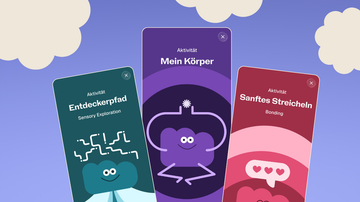
In der mo:mo App
Aktivitäten zur Selbstregulation für 12–18 Monate.
Wenn dein Kind häufig Wutanfälle bekommt, gibt es in der App 24 abgestimmte Aktivitäten, die helfen, Frustration körperlich zu kanalisieren — ohne dass es eine feste Methode braucht.
Aktivitäten ansehen