


Reading time: 6 min
Children encounter many small and large challenges early on. They stumble when learning to walk, get into arguments with other children, or have to adapt to new situations. What matters is not whether difficulties arise – but how children deal with them. This ability is called resilience.
Resilience is the inner strength that enables one to overcome crises, process setbacks, and emerge stronger from experiences. It is not a rigid personality trait but develops step by step throughout childhood. Parents can actively support this process.
What does resilience mean?
The term resilience originally comes from material science and describes how resilient a material is. Applied to children, resilience means remaining flexible and resistant – even when things don't go as hoped.
A child who is resilient can cope with mistakes, seek solutions, and maintain self-confidence. This attitude doesn't grow on its own but develops through many small daily experiences: when something fails and confidence remains, when problems arise and children feel they are not alone.
Why resilience is important early on
The first years of life lay the foundation. During this time, children learn: Can I rely on my caregivers? Am I loved even when I make mistakes? Am I allowed to try new things, even if it doesn't work out immediately?
When children experience security in such moments, basic trust develops, the foundation of resilience. With this trust, they can understand challenges as part of life and learn to grow from them.
Protective factors for resilience
Several factors contribute to children becoming more resilient:
- Secure attachment: Reliable caregivers who take needs seriously.
- Self-efficacy: The experience of being able to achieve something through one's own actions.
- Emotional guidance: Support in recognizing and categorizing emotions.
- Positive role models: Adults who deal with stress constructively.
- Routines: Reliable structures that make everyday life predictable.
Resilience grows in everyday life
These protective factors work not in exceptional circumstances, but in small situations. A fallen block tower that is rebuilt. Shoes that the child puts on themselves, even if it takes longer. The first day at daycare, accompanied by a familiar ritual.
Such moments convey: difficulties are part of it – and they can be overcome. Children learn that they are not alone and at the same time can contribute something themselves.
Everyday situations that foster resilience
- Tower falls over: Instead of intervening immediately, parents can encourage their child to rebuild it themselves.
- Autonomy phase: When children say "no" or want to do everything themselves, it's not just exhausting, but crucial. Here they learn independence. More on this in the article on the autonomy phase.
- Daycare start: A goodbye ritual, a fixed phrase, or a stuffed animal help to find security. Read here how daycare adaptation can succeed.
- Conflicts: Parents can ask questions like "What could we do now?" instead of immediately providing solutions.
Resilience and attachment
A secure attachment is the foundation. Children who know that their caregivers take them seriously dare to do more. They venture into new things, try things out, and know: even if something doesn't work out, I'm not alone.
This interplay of security and freedom is crucial. Parents who provide closeness without removing every obstacle not only foster independence but also inner strength.
How parents can foster resilience
- Mirror feelings: "You're sad because the tower fell over." More on mirroring feelings can be found in this article.
- Make successes visible: appreciate not only the result but the effort.
- Allow and accompany small challenges.
- Model own strategies: Children learn through observation.
- Create rituals that provide security: from bedtime rhymes to morning routines.
A look at the autonomy phase
Resilience grows particularly strong during the autonomy phase. Children discover that they can make their own decisions. They want to decide for themselves, try things out for themselves, and often encounter limits.
Parents sometimes experience this phase as challenging, but it is precisely here that resilience develops. When children learn that their will counts, but that they also have to respect boundaries, they learn important lessons for life.
FAQ on resilience in children
What is resilience in children?
Resilience is the ability to cope with crises, find solutions, and maintain confidence.
How does resilience develop?
The foundation is laid in the first years of life through secure attachments, basic trust, and experiences of self-efficacy.
Can parents foster resilience?
Yes. Through sensitive guidance, by allowing independence, and through rituals that provide support.
What role does the autonomy phase play?
The autonomy phase is a key moment. Children learn to make decisions and process setbacks – an important part of resilience.
Conclusion: Strength grows step by step
Resilience is not a fixed trait, but an ability that is allowed to develop. It arises in small everyday situations: when rebuilding a tower, putting on shoes, or during the first day at daycare. Parents strengthen this process by providing security, taking feelings seriously, and encouraging children to find their own way.
Thus, children learn: setbacks are part of life – and you can grow from them. This attitude makes them strong for the future.
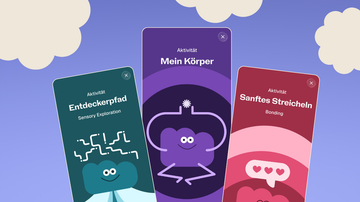
In der mo:mo App
Aktivitäten zur Selbstregulation für 12–18 Monate.
Wenn dein Kind häufig Wutanfälle bekommt, gibt es in der App 24 abgestimmte Aktivitäten, die helfen, Frustration körperlich zu kanalisieren — ohne dass es eine feste Methode braucht.
Aktivitäten ansehen